HRI Blog


Oct. 31, 2019

Buying Oahu Real Estate: Which Loan is Right for You?


Interest rates are low, low, low, and that means it’s a great time to be a home buyer! While median home prices haven’t dropped much nationwide, the costs you save with a low rate over the course of your loan more than make up for any monthly market swings. So, if you’re ready to take the plunge, and if you’ve saved for a down payment (more on that below), it’s time to consider your financing options!


These days, the 30-year fixed-rate conventional mortgage remains the predominant form of financing for home purchases around the country. At an average interest rate of just 3.61% in September of this year, standard terms on these loans are currently quite favorable to buyers. However, as consumers grow more sophisticated or seek more help through other alternatives, we are beginning to see a rise in the percentage of purchases financed through non-conventional means.


Per the National Association of Home Builders’ analysis of 2018 Census Bureau data, in 2018 nearly 30% of financing secured by home buyers was non-conventional. FHA loans led the pack at 11%, followed by cash purchases at around 10%. While you may or may not have the stack of dough on hand to make an all-cash offer, loans such as an FHA first-time buyer loan may be perfect for you.


Let’s take a look at the loan type options, conventional and non-conventional, that you can consider for your Oahu home purchase:

Fixed-Rate Loan:

The big daddy, the standard by which all others are judged. Accounting for over 70% of loans originating in 2018, conventional fixed rate mortgages are far and away the most common form of financing. These loans offer a single interest rate over the course of the loan, from day-one to day-ten thousand, nine hundred and fifty seven (and a half - thanks leap years!). A conventional fixed-rate loan is perfect for buyers who want a predictable payment and who intend to stay in their new home for the long haul. A down payment is required, so be sure to pad your savings account if this loan sounds right for you.

Adjustable-Rate Mortgage (ARM):

As the name implies, adjustable-rate mortgages do not remain constant like a fixed-rate loan. Typically offered at lower starting rates compared to fixed-rate loans, an ARM offers a better deal for a period of time such as five to ten years, and then the rate “adjusts” to the current market. So, if you’re planning to sell the home two or five or even ten years down the line, this financing option may be a great option for you to save money during that period. Considering the incredibly low rates offered these days, it’s unlikely that your ARM rate will remain as low once the initial fixed period runs out, so make sure that the terms of your ARM coincide well with your long-term plans.

FHA Loan:

Backed by the Federal Housing Administration, an FHA loan offers the opportunity for qualifying buyers to pay as little as 3.5% down on their home purchase instead of the typical recommended 20% on a conventional loan. While 20% is not required by all conventional financing, conventional guidelines tend to be more stringent, so FHA loans are a perfect option for prospective buyers with decent credit but lower savings to make a purchase. FHA loans are fixed-rate over 15- or 30-year terms, with a maximum loan amount that varies by state and county. Note that buyers of FHA loans must use the home or investment property purchased as their primary residence, and they are required to pay for mortgage insurance over the course of their loan.

VA Loan:

Veterans who have served for 90 consecutive days during wartime, 180 days during peacetime, or spent six years in the reserves are eligible for a VA loan with no down payment and no mortgage insurance requirements. These loans, backed by the Department of Veterans Affairs, do have some additional requirements, however: The home must serve as the buyer’s primary residence, and the home must fit within certain standards set by the program. That means no fixer-uppers are allowed!

USDA Loan:

If the bustle of city living no longer suits you and you’re looking to start a “Green Acres” life of your own, consider a Rural Development loan from the US Department of Agriculture. These loans are backed 100% by the government, meaning you don’t need to pay a down payment, and the program offers discounted mortgage rates for those looking to lay down roots in a rural area. Guidelines include restrictions on buyers’ debt-to-income ratio (not to exceed 41%), and property purchased must be in an eligible rural area as designated by the USDA. Learn more about the various types of USDA loans.

Bridge Loan:

If you’re looking to buy a new home but your money is tied up in your current home’s equity, then a bridge loan is your answer. Like its namesake, a bridge loan spans the gap between the home you currently own and the home you want to purchase. Lenders will combine your current and your new mortgage payments into one, and when you sell your current home you will use those proceeds to pay back the bridge loan. These loans are great for buyers who currently own a home, have good credit and a low debt-to-income ratio.

Bucking Convention(al Loans)

We hope that this brief overview helps to give you an idea of your options for financing the purchase of your next home. As local real estate experts, we have seen it all, and we know how important it is for you to consider all your options. For a good portion of buyers, a conventional fixed-rate loan makes the most sense. But for many others, these alternatives are worth considering! Let us know if you’re in the market to buy a home, and we’ll be happy to hook you up with a trustworthy lender offering competitive rates. It’s our pleasure to assist in anything real estate related, from the first steps of securing financing to the day you move in and for years to come.


Posted in Buying a home
Oct. 23, 2019

Ten Top Tips for Oahu Landlords


Owning rental property in Oahu can be a lucrative investment, providing a steady stream of income every month. However, being a landlord can also be a major source of stress, headaches and heartache, from screening tenants to collecting rents to upkeep of your property.


So how do you manage your Oahu investment property or properties while simultaneously managing your sanity? Here are some helpful tips that may save you time and money in the end.


1. There’s An App For That

Whether you’re managing two or twenty rental properties, it’s critical that you stay organized. Losing track of your repair receipts might mean a hit to your tax deductions. Misplacing a lease agreement may bite you later if you’re forced to evict. Utilizing property management software, you can keep everything safely in one place. Some apps even enable you to collect and track rent payments, manage repair requests, screen tenants, and list a vacant rental on sites like Zillow and HotPads.


Take a look at these reviews to learn about 2019’s best property management apps:

FitSmallBusiness.com

Reviews.com


2. Think Long-Term

As a landlord, you’re likely not in it for a quick flip. You want to extract the most income from your property over a period of years, even decades. With that in mind, consider undertaking renovations and improvements that may cost more right now but will pay off in the long run. This includes adding in-unit laundry, updating the kitchen and bathrooms, and installing soundproof windows in street-side rooms. It may take a few years for these investments to pay off, but in the end you will recoup your costs, realize higher total income, and have a property that’s more attractive to future renters.


3. Don’t Overlook Landscaping

The next time you’re heading to your rental property, try this little experiment: Drive past first without going inside, and take note of the exterior. Does it look inviting, or does it look unkempt and overgrown? Based on the view, would a potential renter want to see more? You don’t need a veritable Garden of Eden outside your property, but a well-kept exterior space is important in maintaining your rental’s curb appeal. Plant some low-maintenance foliage, and set up a system to manage its health. Contract a landscaping company if need be—in the end, you’ll benefit from more renter interest and higher rents.


4. Show Your Tenants Some Love

The stress of being a landlord can vary greatly based on the quality of your tenants. To ensure that the good ones stick around, address their concerns promptly. If something at your property needs repair, express to your tenants that you are working hard to solve the problem, and do your best to get things fixed as soon as possible. Just like you want good tenants, your tenants want a good landlord who cares about more than just receiving their monthly payment. Write them a letter of appreciation for prompt payments and keeping the place clean, or simply thank them for treating your property with care the next time you’re around.


5. Sweeten the Deal

Since a thank-you note may not always be enough to retain your good tenants, consider offering them concessions such as a free month of rent or an extension of their current lease. It’s always easier to keep your current tenants than to find new ones, so losing a bit of income in the short term is well worth it to save you the time and effort of finding and screening a new batch of applicants. If a lease is set to expire during slower months like the holiday season, you can propose an extension to keep your tenants in the property until a busier time of year when new tenants will be easier to find.


6. Keep a Record of Your Property’s Condition

To protect your investment, be sure to keep detailed records of your property’s condition between tenants. Before new tenants move in, take photos and video of the entire property and save them securely in multiple systems like your computer and the cloud (a la Dropbox or Google Drive). When your new tenants are ready to move in, prepare a checklist and walk through the property together. Note the condition of each space, and have your tenants sign the checklist to acknowledge that the walkthrough was conducted.


7. Analyze the Market

If you’re getting ready to put your property on the rental market, first perform a comparable rental analysis. Just like selling a home, your best resource for pricing a rental is to compare your own property to others in the area. Look at rental properties of similar size, bedroom and bathrooms, and amenities. Make note of their rental prices, and adjust your target price based on differences like recent upgrades or problem areas. Losing rent income due to vacancy is your greatest enemy as a landlord, so it’s important to maintain a competitive, fair price.


8. Require Rental Insurance

This is frequently overlooked by landlords, but it can save you a heap of trouble. Requiring your tenants to have rental insurance will help if your tenants cause more damage than their security deposit covers. If a forgetful tenant leaves on the stove and starts a fire, or leaves the sink running and causes water damage, your landlord insurance might not cover all of the damage. You may be able to recover damages from your tenants’ renters insurance. In addition, your tenants will be more secure from losses to their own personal belongings. Renters insurance is a benefit to everyone.


9. Work With a Real Estate Attorney

Whether you are drafting a lease agreement or seeking an eviction for a deadbeat tenant, it is eminently helpful to work with a real estate attorney who knows federal, state and local laws inside and out. As we all know, attorneys don’t necessarily come cheap; but making sure that your i’s are properly dotted and your t’s are well-crossed is worth the price. While on its face a contract or a court filing may look simple enough, it can set you back months of time and thousands of dollars to get something wrong.


10. Treat it Like a Business

Ultimately, your rental properties are like any business investment, and you should treat them as such. Focus on cash flow: pursue late rents and do not hesitate if eviction is required. Invest in improvements which will net higher rents. Follow laws and ordinances to the letter, including Fair Housing and zoning rules. Maintain your property to high standards. And most of all, if you cannot afford the time and effort of being a hands-on landlord (which can be considerable), then consider hiring a property management company. You’ll lose a portion of your rental income, but the majority of the stress that comes with managing a property will be off your hands. Not a bad tradeoff.


We’re Happy to Help


As your local real estate experts, we have years of experience helping investors buying and selling rental properties. In addition, we have a broad professional network of trusted vendors, and we are always happy to recommend a contact for any of your investment property needs. Whether you’re looking for a real estate lawyer, a painter, a photographer for your rental listing, or any other industry pro, we are well acquainted with some of the absolute best. Let us know how we can help!


Oct. 16, 2019

No Green Thumb? No Problem: 7 Easy Houseplants to Liven Your Living Space

If you’re buying Kailua real estate, staging your Honolulu home to sell, or when rainy weather has just got you down, then you could stand to benefit from some bright and lively houseplants!

Houseplant History

For thousands of years, people have been bringing a little piece of the outdoors into their homes. According to the legend, King Nebuchadnezzar II of Babylon commissioned the fabled Hanging Gardens for his wife, Queen Amytis, way back in 600 BC. The Greek scribe Berossus noted that the queen was not native to Babylon, so the Hanging Gardens were filled with familiar foliage to help her feel at home in a foreign land.


Historical findings have also documented houseplants in ancient Egypt, Greece, Rome, and among eastern civilizations. Roses and violets in marble or terracotta pots could be seen bestrewn about the homes of wealthy Roman citizens, eager to display the tallest and brightest flowers. Miniature potted plants such as the Japanese Bonsai and Chinese Penjing first appeared around 200-500 CE.


Throughout the Middle Ages after the fall of Rome, houseplants largely fell out of practice, surviving mainly in monasteries by monks who grew practical plants like herbs and vegetables. When the Renaissance came around, interest in houseplants was revitalized, and wealthy individuals paid handsomely for exotic specimens procured by explorers such as Christopher Columbus. Suffice it to say that humanity has long known the value of the humble houseplant!


Green Living

Aside from simply looking nice, houseplants have some great additional benefits. First and foremost, plants purify the air around us. The hungry buggers gobble up our exhaled carbon dioxide, and they release fresh and clean oxygen for us to breathe in—all at the low cost of a little water and sunshine. Plants also clean volatile organic compounds (VOCs) from the air in our homes, although at such a small scale that it doesn’t make much difference.


Additionally, houseplants have shown various health benefits in clinical trials. In one example from the Department of Horticulture, researchers found that hospital patients recovering from surgery in the presence of houseplants had lower blood pressure and less anxiety, pain and fatigue. Patients reported that the plants “brightened up the room environment, reduced stress, and also conveyed positive impressions of hospital employees caring for patients.”


These effects can be realized in the home or workplace by adding plants of your own! If you have a home office or even occasionally work from home, consider adding a plant or two in view. A study by researchers at Washington State University found that workers with a potted plant in their line of sight saw increases in productivity of up to twelve percent.


Houseplants Made Simple

You may be interested in houseplants to liven up your home’s decor or to reap the health and other benefits covered above. If you’re new to taking care of plants, however, you’re likely wary of making a purchase just to see it die in the weeks or months that follow. But fear not, as there are plenty of options for those less floriculturally-inclined.


Here are just a few plants that DON’T require a green thumb to keep alive and well:


Aloe Vera


This hardy succulent only needs to be watered every couple of weeks. Allow soil to dry completely between waterings. As an added benefit, you can cut a piece and apply the latex it secretes to ease sunburns and minor cuts.


Snake Plant


Another plant which doesn’t need frequent watering, this succulent’s thick and waxy leaves store plenty of moisture. No need to stress while you’re away on a two-week vacation!


Spider Plant


This popular houseplant is perfect for newbies. A mainstay of homes around the country, and for good reason, the spider plant can withstand plenty of neglect. Just keep them watered and in indirect sunlight.


Pothos


Although tropical in origin, this viney plant’s heart-shaped leaves thrive even in cooler and drier climates. They don’t mind lower light or humidity levels, making them an easy and beautiful option for any home around the country.


Cactus


A symbol of the dry desert, cacti are the quintessential low-maintenance plant. Allow soil to dry between waterings; roughly a week if your pot has drainage holes, longer if not. As you might have guessed, these do require lots of sunlight, so place them in a brightly-lit space.


Cast Iron Plant


This lush evergreen is as resilient as its namesake. It is known to survive drastic shifts in temperature, and it doesn’t need a whole lot of sunlight or water to thrive.


Tillandsia (Air Plants)


As their name suggests, these beauties don’t even require soil to grow! As "epiphytes," plants which extract nutrients directly from the air around them, you can hang tillandsia from the wall or ceiling as an attractive decorative piece. Just place them in bright sunlight and mist them occasionally to prevent drying, with frequency depending on the season.


Boost Your Quality of Life

As local real estate experts, we aim to show your listing in the best possible light. Just like a fresh coat of paint, a few well-placed plants can revitalize a room, so so we love to use them when staging a home! The truth is that you don’t need a green thumb to enjoy the mood and health benefits of indoor plants. Give some of these houseplants a shot, and let us know how you fare! We’re always happy to hear from you.


Posted in Lifestyle
Oct. 10, 2019

Spooktober Special: On Haunted Homes


Hear ye, hear ye, guys and ghouls: Spooktober is upon us, and with it come the costumes, the parties, the candy, and of course the haunted houses. Right up there with graveyards, real estate has long been the setting for scary stories of things that go “bump” in the night.


Haunted House Hunters

To the true believers, living in a haunted house sounds like a recipe for many sleepless nights. Research from YouGov shows that about 45% of Americans do indeed believe in hauntings and ghosts. Those folks will likely shy away from visiting, much less purchasing, a haunted home.


To the skeptical, real estate with a haunted past might sound like a good way to snag a deal on a property. But, in most cases, a home will sell for roughly the price that it’s worth based solely on its location and material value—haunted or not.


However, there are some examples of homes garnering significantly less buyer interest due to their spooky reputation. For instance, this Victorian mansion in Massachusetts, once a Freemason hall and then a brothel, was listed shockingly cheap at just over $300,000.


If the House Has Ghosts, Must You Disclose?


Something you may not know: some states require real estate agents to disclose in a listing whether there was a death in the home, or even whether the house is considered haunted by some. For a fee, you can find out about deaths in a home for yourself with online services like DiedInHouse.


In California, for example, an agent must disclose whether there has been a death in the home in the past 3 years, including natural deaths. In Hawaii, however, any occurrence that had no material effect on the physical structure of the house does not need to be disclosed.


Other states, like Georgia, don’t require anything to be disclosed up front, but they do require any questions to be answered truthfully. A majority of states do not require deaths or reports of the paranormal to be disclosed, in order to protect sellers from undue stigmatization.


A Selection of Spookings

In the spirit of the season, we thought we’d share a few of the spookiest homes in America. How would you like to live in one of these?


The Los Feliz Murder House

Source: Realtor.com


Early in the morning of December 6th, 1959, Dr. Harold Perelson murdered his sleeping wife with a hammer and attempted to do the same to his daughter, Judye. The teen girl managed to escape and rouse her neighbors who called the police.Harold Perelson proceeded to ingest dozens of pills, dead before an ambulance arrived.


Rumor has it that this Spanish-style mansion in the upscale LA neighborhood of Los Feliz was briefly rented out to a family in the early 1960s, after which it remained empty for decades. Christmas decorations were visible inside the home, likely left by those renters as the Perelson family was Jewish. Neighbors reported paranormal activity, and the house became an attraction for thrill-seeking tourists. Decades later in 2016, the home was sold.


The Winchester Mystery House

Source: Pixabay


Once the residence of Sarah Winchester, widow of firearm magnate William Wirt Winchester, this Queen Anne Victorian mansion in San Jose, CA, is well known for its puzzling design and its frequent paranormal sightings.


The home has been featured in media such as Ghost Hunters, and it was the set location for the Winchester film starring Helen Mirren as Sarah Winchester.


The Amityville House

Source: Wikimedia Commons


In 1974, six members of the DeFeo family family were found murdered at this house in Amityville, New York, 30 minutes outside of New York City. Roughly one year later, the Lutz family bought the home at a huge discount. They lasted 28 days in the home before leaving due to sightings of paranormal activity.


The Lutz family’s short time in the home was memorialized in 1977 in a novel by Jason Anson, The Amityville Horror, which has since been made into multiple feature films.


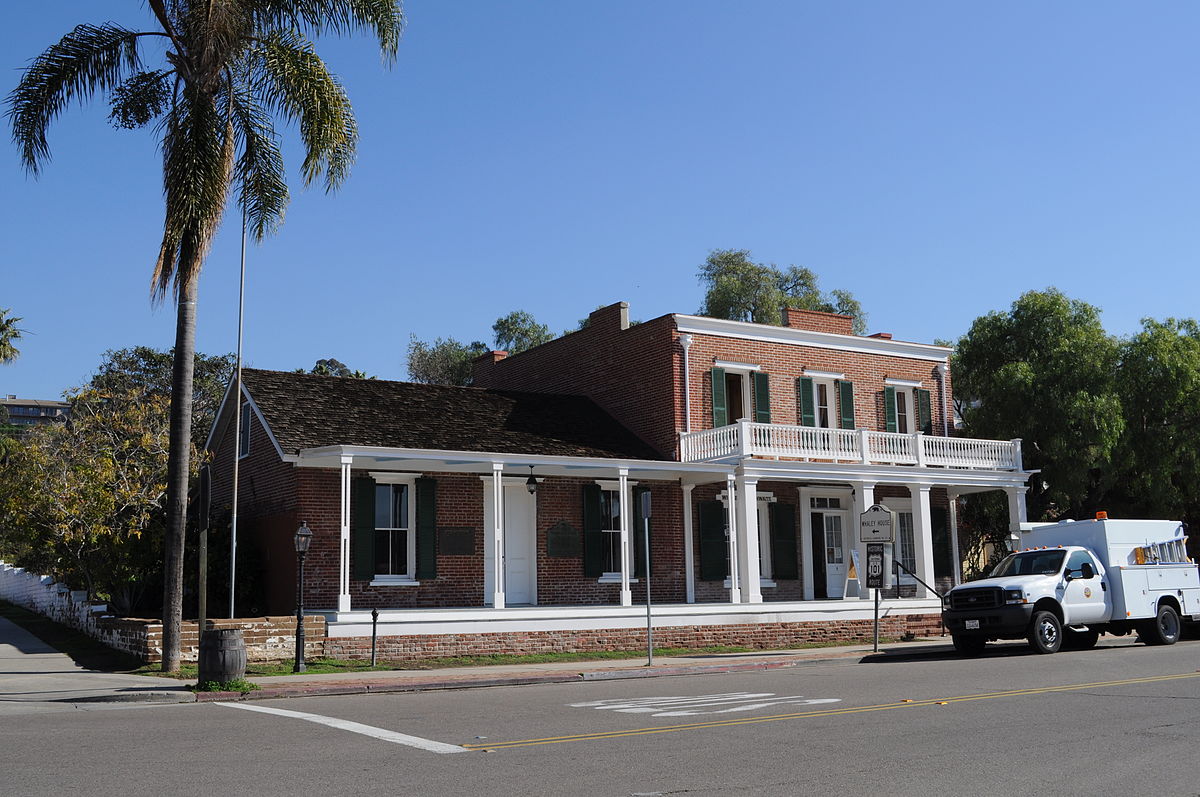
The Whaley House

Source: Wikimedia Commons


This haunted house in San Diego’s Old Town district is said to have been the site of hangings before it was built in 1857. The owner’s daughter, Violet, killed herself at the house in 1885. Stories say that a number of spirits roam the house to this day.


Now a California Historical Landmark and a museum, you can take a tour of the Whaley House for yourself during a trip to Old Town… if  you dare!


Tis the Season for Spooking


These are just a few of our nation’s many reportedly haunted homes. As a Halloween attraction, the haunted house industry brings in over $300 million each year. Do you plan on visiting a haunted house with your friends or family this year?

Posted in Lifestyle
Oct. 3, 2019

Three Nasty Surprises During Home Renovations


If you’ve remodeled or renovated a home (or seen it happen on TV), then you’re likely well aware that surprises are to be expected. While a home inspection at the time of sale should catch the obvious issues, some problems may fester deep within your walls or simply pop up throughout the proceeding years of use.


Granted, not every surprise during home renovations is the end of the world. You may, for instance, discover a trove of cash buried beneath your floorboards, or a long-lost love letter to a former resident. But such discoveries do not occur nearly as frequently as finding out that something else needs fixing and your budget just took a hit.


To prepare you for your own future renovations and remodels, we’ve outlined three of the most common and most aggravating surprises which you may encounter along the way. Starting off with…


Water Damage

The bane of any homeowner, water damage is always insidious, often silent and unnoticed, and potentially catastrophic. Within minutes, water can seep into your structure and begin to cause significant harm to any wet-sensitive materials. Walls begin to stain and blister, and wood floors may warp beyond repair. Within days, harmful mold and microbes begin to grow. Eventually, mold may become so prevalent that residents must be evacuated due to unsafe conditions.


Left unchecked, water damage may harm your home’s structural integrity and spread hazardous mold so extensively that entire portions must be torn down and rebuilt. While your homeowners insurance will typically cover these repairs, you are still potentially out of your home for weeks in the meantime. Not to mention the headache of dealing with insurance and contractors in an already stressful situation.


To prevent water damage, stay on top of your home maintenance both inside and outside. Clean your gutters and maintain trees and foliage with deep roots which might break a pipe. Check appliances for leaks, and if you spot any sign of water damage be sure to act quickly. The sooner you can stop the incursion of water where it shouldn’t be, the less damage your home will sustain. And if you discover mold and water damage during renovations, at least count yourself lucky that you discovered it when you did! While you’re at it, consider replacing any old galvanized plumbing with newer PVC or copper pipes.


Unsafe Materials

Back in the day, our walls were decorated with lead paint and insulated with asbestos. Only later did we come to know that these materials were entirely unfit to be used in our homes. Nowadays, safer materials are used, but many homes built at least several decades ago are still rife with these dangerous substances.

Left alone, asbestos and lead won’t cause you much grief. However, renovations which disturb these hazardous materials can spread dangerous dust and powder all over your home. Therefore, before starting any major home renovations, be sure that you know what you’re cutting into.


You can test for lead paint on your own using a home test kit such as these. To test for asbestos, you’ll need to contact a professional abatement service. If they discover problems, abatement service will run you roughly $75-200 an hour, according to HomeAdvisor. Lead abatement may cost you as little as $100 or as much as $20,000, depending on the size and scope of your project. Nevertheless, the price is well worth it for the safety of your family and guests.


Dangerous Wiring

Your home’s electrical wiring is hidden behind its walls, so these issues are often discovered in the midst of renovations. Common electrical hazards include defective or exposed wires, outlets close to water, old or corroded insulation, and outdated electrical design. The older your home, the more likely that its electrical grid is unsafe.


Like water damage, it is certainly a pain to discover electrical issues after you begin renovations, but you can at least be thankful that you’ve discovered them at all. Poor electrical wiring poses a significant fire hazard, and upgrading outdated systems means a safer home for you and your loved ones.


Installing new electrical wiring can be a tedious and costly process because it is all behind your walls. That makes renovations the perfect time to upgrade your electrical systems. While you’re at it, you can install new smart home features like a smart thermostat or lighting controls. Take advantage of the work you’re already planning to make your home more safe and more modern!


Get Help You Can Trust

The issues covered above are just three of the many surprises you may encounter during a home remodel or renovation. Most important of all, remember to add some breathing room in your budget to deal with unforeseen problems, and make sure that you trust your hired help.


As long-time local real estate agents, we are well acquainted with excellent and trustworthy services in your area, and we’d be happy to connect you with the help that you need. Let us know your plans - we always love to chat about real estate!

Posted in Selling a House, Trends
Sept. 23, 2019

The Art and Science of a Listing Price


Selling real estate is a unique career. Agents come in all shapes and sizes, with diverse backgrounds ranging from business management to entertainment to homemaking to everything else under the sun. Given these vast differences in abilities and past experience, your process working with a real estate agent can vary dramatically from one to the next. And yet among every single agent, there’s one skill that matters more than all the others. One skill which can make or break your sale. One skill which is truly the heart and soul of an agent’s work.


“So, what is it?” you say. “Spit it out! What’s the most important skill that every agent needs?”


Well, since you asked so nicely: It’s setting the listing price.


Buy Low, Sell High


We all know that negotiations are the name of the game when buying or selling a home. You want an agent who will apply force to every lever of a deal, fighting at every opportunity to save you money or boost your closing price. What you may not know is that a properly priced listing can earn you more money right from the outset. Conversely, an agent who can spot an improperly priced home might just snag you a deal.


In nautical terms, setting your listing price means choosing where to drop anchor. Once you’ve settled on a location, you throw out your bait to see what house-hunting fish swim in for a nibble. Yet no matter how tasty the bait or how shiny your lure, if you price too high, you simply won’t get any bites.


This metaphor is particularly apt when you consider broader business strategies. An “anchor price” is a widely used tactic that companies use to establish a psychological baseline for their products. If the shoe store says some boots are worth $200, then you’re getting a great deal when they’re on sale for just $100, right? (Even if they cost the store just $5.) While it’s exceedingly rare to see a home listing’s price drop anywhere near 50%, real estate is still affected by this psychology—with very real effects.


Bigger Might Not Be Better


Those effects are most clear in an overpriced listing. If you list too high, you’ll be subject to lowball bids, upturned noses, and open houses as empty as a ghost town. New listings tend to see the most activity and buyer interest within their first few weeks on the market. When your listing is overpriced, you’ve essentially wasted the most crucial days of your home’s marketing period.


After a few lonely weeks with too few or too poor of offers, you’ll likely consider a price reduction. Mind you that price reductions are a completely valid tactic in many cases, as markets can shift during the listing period for a myriad of reasons which may be impossible to foresee. However, it’s not a fun thing to do, if the lack of interest stems from simply pricing too high for the current market at the time of listing.


Ultimately, an overpriced listing is one of the great tragedies of real estate. The reverse, however, is not so dire. Let’s look at underpriced listings next.


How Low Can You Go?


An under-priced listing is not nearly the same catastrophe as an overpriced listing. In fact, setting your home’s listing price below its current market value can be a compelling strategy. Like a Black Friday sale, a low listing price can draw folks out of the woodwork to take a look at your home. Remember that the first few weeks of a new listing are the most important—a low listing price can pack those weeks with open house visitors, agent showing requests, and “saves” on sites like Zillow and Trulia.


That’s not to say that pricing low doesn’t come with risks. If your home still garners less than the critical mass of interest needed to boost offers and counters above market value, you’ll wind up in another sad state of affairs. In a worst case scenario, the market may shift under your listing and (like current interest rates) you’ll have little room to maneuver the lows any lower amidst an economic downturn.


The safest bet for most sellers and agents, especially those with less experience under their belts, remains to price a listing right around market value.


Finding the Sweet Spot


So how does an agent find exactly the right price to drum up the most interest and highest offers on a listing? The best tools at an agent’s disposal are the recent sales around your home.


When you first meet with an agent, they’ll likely provide you with a CMA, or Comparative Market Analysis, detailing the price and statistics of recent listings in your area. Much like an official appraisal, CMAs compare the sold homes in your area, their features, amenities, and the dates they sold, against your own. They’ll also compare the homes that are active and pending right now, more indicators of your current local market conditions.


By comparing and contrasting your home with other listings in your neighborhood, your agent can triangulate a ballpark figure for your home’s value. That’s the science of setting a listing price. Popular home search tools like Zillow have grown that science into complex algorithms which claim to output estimates within a few percentage points of error.


Then there’s the art of pricing a home. Like painting a masterpiece, it takes years of experience and a profound professional insight to obtain an organic sense for pricing. Through dozens of transactions and persistent study of the local market, consumer tastes, national trends and lender criteria, a seasoned agent has the acumen to see beyond the comparables. Even in a subdivision with identical floor plans, every home is unique. To assess every variable and produce a strategic, targeted price is a talent which not every agent possesses.


Your Local Experts


At Hawaii Realty International, we’ve been working in your neighborhood for years. We know what works, what sells and how much it sells for. If you’re thinking of buying or selling a home on Oahu, let us know. We’d be happy to discuss your options during a free, no-pressure consultation. Real estate is our passion. We’re excited to share that passion with you, to match you with the great results that you deserve!

Posted in Selling a House
Sept. 16, 2019

The Importance of Interest or: How I Learned to Love the Fed


The year is 1984, and despite Orwellian predictions to the contrary, nothing seems to be going poorly at all as you amble down your tree-lined street. A neighbor cheerfully hollers across the road, but with Purple Rain cranking through your Walkman, you can’t quite make out what he said. Nudging the headset off one ear, you hear him repeat, “Howdy neighbor!” Well, howdy, yourself!


You’ve rented here for quite a while. It’s a sleepy little suburb with friendly folks and good schools. For years, you’ve saved diligently with the goal of making an offer on one of the charming homes for sale that you see every day on your walks. Browsing the Yellow Pages and consulting with friends, you finally found a real estate agent who you can trust. Now all that’s left is to get approved for a mortgage! Considering your outstanding credit, the lender is willing to make a deal—thirty years fixed at a low rate of just fourteen percent!


Today’s Rates are Hard to Beat

It may seem crazy to young homeowners and aspiring buyers, but throughout the 1980s the national average mortgage interest rate was well into the double digits. Recession and inflation starting in the late 70s prompted drastic measures from the Federal Reserve who cranked up interest rates to even as high as twenty percent. Since then, and especially after the financial crisis of 2008, the average rate has seen a precipitous decline. After years of wavering around four percent, the notion of a thirteen or fourteen percent mortgage is unthinkable to most new and would-be homeowners.


Let’s compare an average 30-year fixed-rate mortgage in August 1984 with August 2019:

  • Loan of $200,000, 30-yr fixed
  • August 1984 avg rate: 14.47%
  • Total cost over lifetime of mortgage: $879,962


  • Loan of $200,000, 30-yr fixed
  • August 2019 avg rate:  3.62%
  • Total cost over lifetime of mortgage: $328,154

In 1984, your mortgage would cost over four times the amount borrowed over the course of the loan. Whether you’re bearish or bullish on the economy as a whole, with a little perspective it’s abundantly clear that home buyers have it very, very good these days. As an extreme example, the stark contrast illuminates how important  interest rates are in a home purchase.


Using more recent and normal examples, the current average still beats recent rates including just last year. In August 2018, an average fixed-rate loan of $500,000 would cost you $917,389 over 30 years. One year later in August 2019, you would save nearly $100,000, at $820,386 over 30 years. That’s a huge difference and huge savings after a rate drop of less than one percent (4.55 to 3.62%).


Use Low Interest Rates to Your Advantage

So what does this all mean? First off, it’s clear that buying a home when rates are low is the most effective strategy to ensure that you’re getting a good deal. Both buyers and sellers benefit when rates are low, as buyers can afford to borrow more money for less overall cost. When buyers can afford bigger and better homes, competition is increased across the market, listings garner wider interest, and ultimately sellers receive higher offers and closing prices. All at essentially no extra cost to the buyer, because their money simply went further at a lower interest rate.


This also means that homeowners who purchased recently could be eligible to save big by refinancing an existing mortgage above current rates. According to analytics firm Black Knight, four out of five mortgages originating in 2018 are at least 0.75% higher than today’s rates. Additionally, they found that most mortgages from before 2004 could have rates lowered by about 1.75%, leading to massive savings.


We’re Happy to Help


Inevitably, the Federal Reserve will raise interest rates and the market will retract to some degree. Of course, nothing about the economy happens in a vacuum, and there are always countless extenuating factors. So we’ll skip making bold predictions. Instead, we will simply recommend this sage old advice: “Get while the gettin’s good.” Rates are nearly as low as they can be, and real estate is entering its most active time of year. If you’ve been thinking of buying or selling, now is an excellent time to do so! Let us know how we can help.


Sept. 10, 2019

How Does Smart Home Technology Affect the Sale of My Home?

smart home technology


In the 1950’s, homeowners were wowed by dreams of the future, with flying cars, self-baking ovens and automated vacuums. Many of these concepts have come to life with smart home technology, though not necessarily in the way they were once imagined.

Smart homes today revolve around making life easier, letting you adjust everything from temperature to lighting from anywhere in the world. These types of improvements do a lot to attract millennial buyers who have grown up with technology and look forward to its integration into the home.


A Little Does a Lot

Having access to tech in a home office, kitchen and bathroom will set your home apart from other houses without such modern conveniences. Fortunately, unlike completely remodeling major portions of the building, adding value to your Oahu home with smart tech won’t break the bank.

Spending around $1,000 before putting your Kailua home for sale, a paltry sum where renovations are concerned, will result in significant gains on the housing market. Though these aren’t always monetary, it can result in a faster sale since these features are very attractive to buyers that would be interested in installing some of the same units themselves.


Doorbells and Detectors

Many tech tools don’t take much of a time investment when it comes to installation but provide a host of benefits that you and future homeowners will inevitably enjoy. Some of the most common items that will help craft the perfect smart home include:

  • Video Doorbells - Security is always a major concern, and being able to keep an eye on your front door while at work or even in the shower makes a home feel that much safer.


  • Smart Locks - Another front-door option, these take a little more effort to install but the added security and keyless entry options make it a worthwhile addition.


  • Smoke Detectors - Knowing anytime when there’s a fire or batteries need changing is a definite boon, and the cost of multiple detectors can be offset by smart devices that listen for the alarms already present in your house.


  • Thermostat - The first real integrated smart device, this can ensure your home is always at the correct temperature and can even respond to voice commands when you’re relaxing on your couch!


  • Light Bulbs - Lamps on timers have been a mainstay of vacationers for decades, but smart bulbs will turn on with your phone, and many can even adjust color and brightness on a whim!


  • Smart Speaker/Hub - Alexa and Echo, Amazon and Google’s smart-home supermodels, are just two examples of units that respond to your voice and tie all of your tech together into a cohesive unit.


These simple upgrades will transform your home, and even though they seem like superficial additions they let possible buyers see your house as more than building. Safety and security are just as important as comfort and convenience, and when it’s all integrated it becomes one irresistible package!


Room to Improve

While all of this technology does wonders for your home, you also need to consider which rooms will benefit most from electronic additions. Every area can be upgraded, but certain tech fits more easily in specific locations.

Living rooms or gathering spaces are definite spots to create a centralized hub for technology. Having your smart hub where everyone congregates makes it much easier to control and monitor the house while entertaining, and hose-shoppers will take notice when the primary living space is set up to be a control room for all of their toys.

Another space that benefits from these upgrades is the kitchen. While a smart refrigerator is more expensive than other options, adding high-tech appliances to the most complex room in the house makes it that much more alluring. Even something as simple as adding receptacles with USB ports by the nightstand can be a deal-maker!


Selling My Home With Savings

It’s not just a fancy screen on a dryer that makes it a big selling point. Making your home smarter also makes it energy efficient. If lights turn off when you aren’t home and thermostats regulate heat and cooling efficiently, homeowners are going to see a drop in their energy bills. High tech security also looks good to insurance companies, so fire alarms and video doorbells are a definite win for you and potential buyers.

Getting your house ready for the Oahu real estate market is never easy, but make sure you keep smart home technology in mind as you prepare to put your Kailua home for sale. The added value comes in a variety of ways, and if spending around a thousand dollars helps you make the sale more quickly, it’s an investment any homeowner can get behind!

If you find it time to buy or sell your home on Oahu, I hope you'll think of me!

Posted in Selling a House
Aug. 26, 2019

Some of the Most Unique Homes in America


Have you ever walked through an open house or a showing and seen a uniquely odd, custom feature to a home that made you scratch your head? Although the homes we list are some of the most beautiful properties we’ve ever seen, we have still seen our fair share of atypical custom additions. With this in mind, we thought it’d be fun to take a departure from the pristine luxury homes we typically present, to venture through some of the most eccentric and sometimes, flat out bizarre, architecturally designed homes across America. These unique homes are truly one of a kind!


Smith Mansion - Cody, Wyoming


Smith Mansion, unique homes

Located in the beautiful Wapiti Valley, Smith Mansion is the former home of builder and engineer Lee Smith, who became enthralled with his building project after starting to build a home for his wife and children using locally gathered logs and wood. After completing the base of the home, he got inspired and continued to add on extra floors and balconies. Fed up with how much time and energy he was putting into the construction of the house, Smith’s wife divorced him. This, however, only fueled him to keep adding more layers of staircases and scenic terraces. Tragically, Smith fell to his death while working on one of the upper balconies. The Smith Mansion has since sat empty, collecting myths and legends about ghosts and madmen. However, Smith’s daughter, Sunny Smith Larsen, has begun a preservation campaign for the site in hopes of keeping her father’s creation from being destroyed. 


Sculptured House - Golden, Colorado


Sculptured House, unique homesSitting on the top of Genessee Mountain, the Sculptured House was built in 1963 by architect Charles Deaton and is often called “the Flying Saucer House” or “the Spaceship House.”  The futuristic, modern movement style home has appeared in a number of movies, TV shows, and photoshoots. It was most famously featured in Woody Allen’s science-fiction comedy, Sleeper. Deaton ran out of money while working on the home, so the interior is less interesting than the exterior. It remained unlived in until 1999 when the home was purchased by entrepreneur John Huggins, who worked alongside Deaton’s daughter to finish the interior. Today, the house is not lived in, however, hosts private events on occasion. 


House on the Rock - Spring Green, Wisconsin


House on the Rock, Unique homesDuring the 1940s, a man named Alex Jordan decided to build a house on Deer Shelter Rock, a sandstone formation within the scenic Wyoming Valley, after discovering a 60-foot chimney of rock. Jordan built the house as a weekend retreat, never intending it to be a tourist attraction. Peoples’ curiosity peaked as they caught wind of his construction and began visiting in order to see this architectural innovation.  However, people kept coming to see the architectural wonder they had heard about. What started as a 14-room house, has turned into a complex of many buildings, exhibits and garden displays. It is said it can talk multiple hours to walk through the entire property, and there is so much to see, it can’t be done in one day.  In December of 1988, Alex sold The House on the Rock to longtime associate Art Donaldson, a collector and a businessman, who continues to build on Alex’s dream of expanding and entertaining visitors from all over the world.


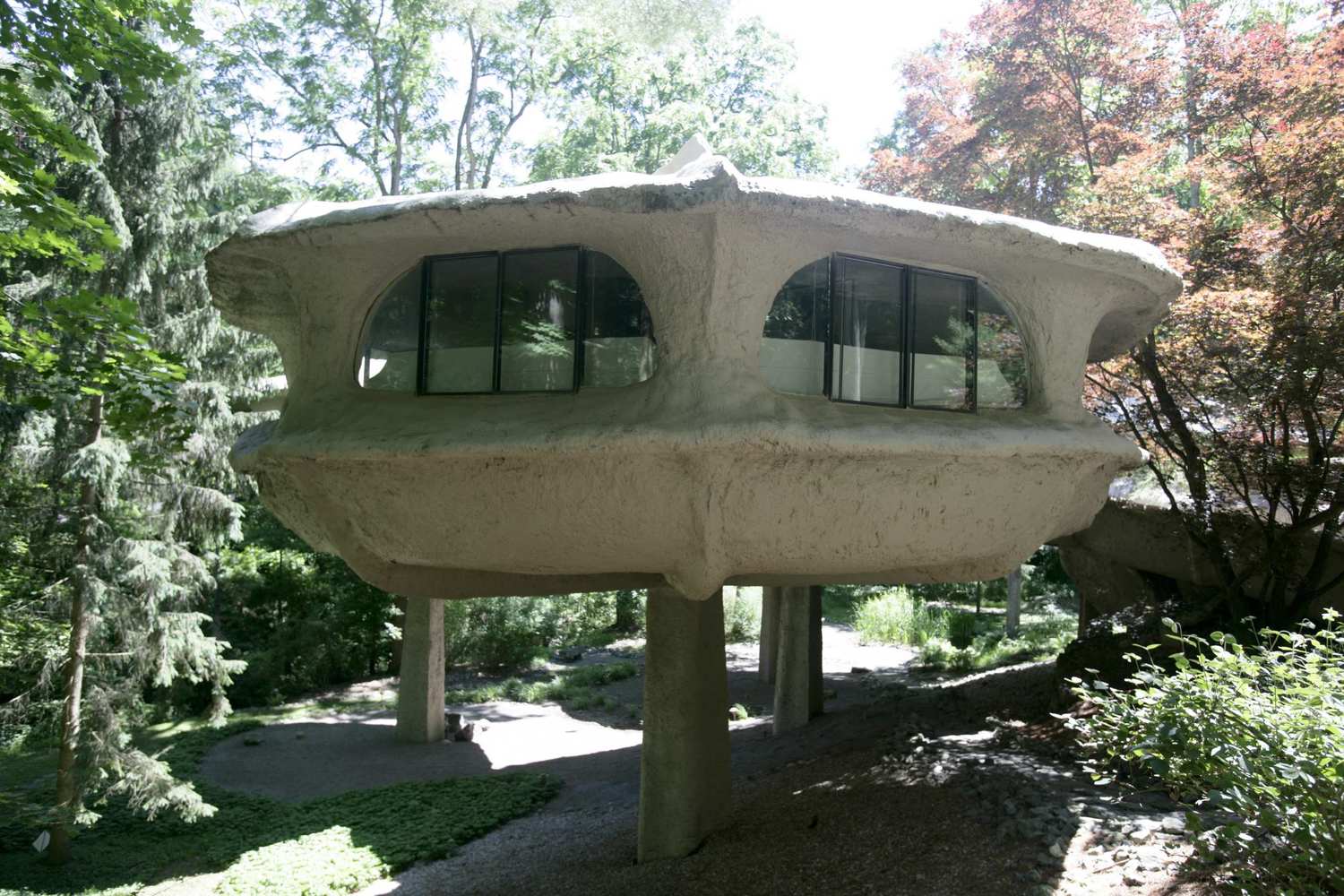
The Mushroom House - Perinton, NY 


mushroom house, unique homesLocated in the town of Perinton, NY, The Mushroom House (also called The Pod House) is a retro-modern designed home, which was fashioned after Queen Anne’s Lace.  The notable design has been featured on TV and in books due to its whimsical appearance. The house was constructed for attorney-artist couple Robert and Marguerite Antell between 1969 and 1972 and was designated a town landmark in 1989. The unique structure sits in a wooded ravine adjacent to Powder Mills Park. The unusual design of the house features four 80-ton pods which rest on reinforced concrete stems. The larger pods spread out into smaller pods, which serve as the typical living spaces. With the exterior of the home being made of concrete, it is very soundproof. This one of a kind property is actually available for rent for $6,000/mo if it happens to call to you!


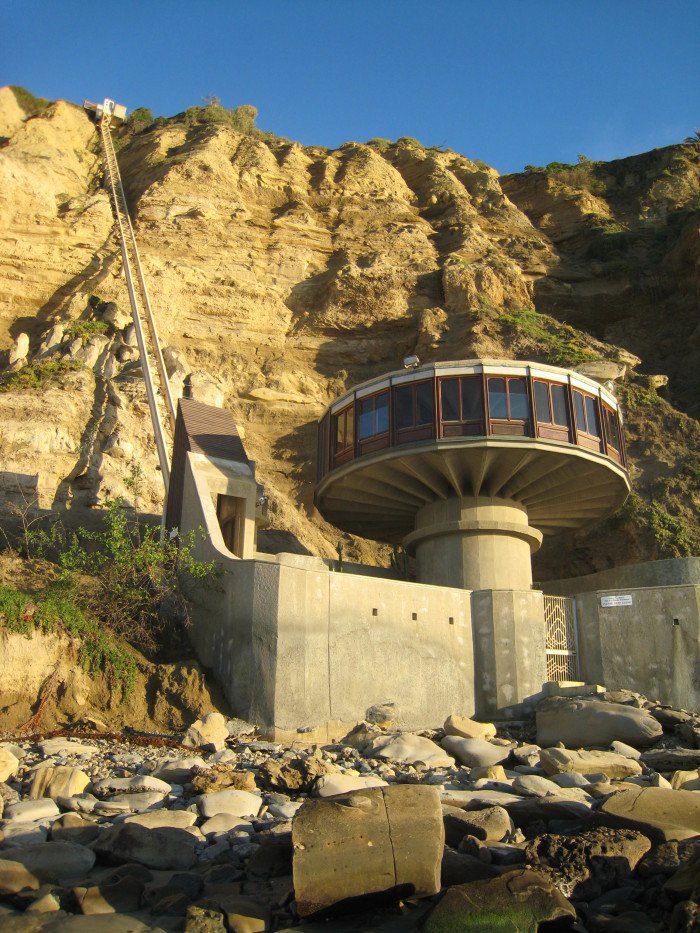
The Pavilion/Mushroom House - La Jolla, California


mushroom house, unique homes

Located within the cliffs of Black's Beach, this uniquely shaped home was designed and built in the 1960s by architect Dal Naegle for General Mills heir Sam Bell to serve as the guest home to the main house that is located at the top of the beach's cliff. A 300-foot tram running down the side of the cliffs links the two properties. Originally called the Pavilion, the structure was built to withstand not only naturally occurring rock slides, earthquakes and waves, but also teenagers! It was purposely built on a remote section of the beach so as to avoid any disruptions. Now, more commonly coined The Mushroom House, the house was last said to be owned by UC San Diego, for use as a place for professors and administrators to take a sabbatical. 


Flintstone House - Hillsborough, California


flintstone house, unique homes

In 1976, the Bay Area architect William Nicholson built this unique 2,700-square-foot home using a building technique known as monolithic dome construction. Throughout the years, the home was updated a bit, with the exterior ultimately painted red, purple and orange. This led to it being dubbed “The Flintstone House” after the famous cartoon. The new owner has gone even further, as after purchasing the house for $2.8 million in 2017, Florence Fang decided to install 15-foot dinosaur statues; a giant metal woolly mammoth and giraffe; a garden of colorful, oversize mushrooms; and a rainbow and peacock sculpture. She has now found herself in a legal battle with the town of Hillsborough, who wants her to remove the animal statues, as they pose as ‘eyesores’. I guess her neighbors think it’s a “Yabba-dabba-DON’T”.


What do you think? Do you find these properties creatively cool or gratuitously obscure? While we assume most of you out there aren’t actively looking for a mushroom house or a property replicating your favorite cartoon, we do know everyone has their individualized needs and desires when it comes to buying a home. We are confident that we can find the perfect marriage of your unique tastes and what the current market offers to place you in your own unique home. If you’re looking to buy or sell, we’ll hope you’ll think of us!

Posted in Trends
Aug. 20, 2019

The Best Oahu Communities: A Look at Kailua Town


Welcome to the next edition of our Neighborhood Spotlight Series, where we will continue to provide a little insight into some of the best towns Oahu has to offer, so you can feel more comfortable in the purchase of your new home in Hawaii.


This month’s featured Oahu community is Kailua Town. If you want to be in the heart of it all, then this is the area for you! Considered the ‘main shopping area’, Kailua Town offers an array of shopping, dining and activities. This area mostly consists of condominium developments. It blends the new with the old, as this community is also actively involved in preserving its heritage, so residents are often engaged in beautification and preservation projects. Within walking distance to both Kailua Beach and main shops, this is prime location!


We have created an infographic to provide a quick glimpse into some of the housing and residential statistics that a potential homebuyer may be interested in for this neighborhood. We hope you find this information helpful!


kailua homes for sale


We have a gorgeous condo for sale in the prime Kailua Town area that could be yours for the taking. Part of the newly completed Ka Malanai condo development, 437 Kailua Rd. #6103 offers spectacular views of huge Banyan trees and the lowest maintenance fees per foot in all of Kailua!  Not only is also one of the largest condos in Kailua, it includes central AC, Quartz countertops and wood laminate flooring. Relax on your 2 spacious lanais off the main living area (with large storage room) and master bedroom. This perfect location is just a few minutes walk to both Kailua Beach and Kailua Town. Contact us today if this looks like it could be a permanent or getaway home for you!


kailua homes for sale


We know that trying to settle on the right community as you’re looking at Oahu homes for sale can be tricky, but here at Hawaii Realty International, we’re here to provide a helping hand and make the process of buying your new home in Hawaii as easy as possible. Please do not hesitate to give us a call!

Posted in Buying a home, Oahu